抖音成人

Evaluating Public Schools

This section provides tools to aid in finding the best public school option for your child. Compare private and public schools, explore school zoning issues, and delve into the public school grading and ranking system. Find information on the safest schools and what they are doing right.

View the most popular articles in Evaluating Public Schools:

School-Based Health Clinics: Funding, Billing, and Student Access

Updated
|
School-Based Health Clinics: Funding, Billing, and Student Access
Learn how school-based health clinics are funded, how billing works, and how students access care in public schools.

School-based health clinics are becoming an increasingly important part of the public education system. As schools take on a broader role in supporting student well-being, these clinics help bridge gaps in healthcare access, particularly for underserved communities. Understanding how school-based health clinics are funded, how billing works, and how students access services is essential for parents and educators navigating today鈥檚 public school landscape.

In many ways, these clinics reflect the same equity-driven goals that shape broader discussions about how public school funding works, ensuring that all students are positioned to succeed academically and physically.

What Are School-Based Health Clinics?

School-based health clinics, often referred to as SBHCs, are healthcare facilities located on or near school campuses. They provide a range of services, including:

  • Primary care, such as check-ups and immunizations
  • Mental health counseling
  • Chronic disease management, including asthma and diabetes care
  • Preventive services, including screenings and health education

These clinics are designed to reduce barriers to care, including transportation challenges, cost concerns, and scheduling conflicts.

How School-Based Health Clinics Are Funded

Funding for SBHCs is typically a blend of public and private sources. This diversified model helps sustain services but can also create variability between districts.

Federal and State Funding

Many clinics receive support through federal programs such as Medicaid and grants from agencies like the Health Resources and Services Administration (HRSA). State governments may also allocate funds, particularly in states prioritizing school health infrastructure.

According to the ,
. . .read more

NYC Schools Still Most Segregated in 2026

Updated
|
NYC Schools Still Most Segregated in 2026
NYC schools remain among the most segregated in 2026. Explore causes, data, and what families should know about equity and access.

Despite years of policy discussions and reform efforts, New York City鈥檚 public school system remains one of the most segregated in the United States in 2026. While the city is among the most diverse in the world, its schools continue to reflect stark racial and socioeconomic divides that shape educational outcomes.

For parents, educators, and policymakers, understanding why NYC schools are still highly segregated is essential to navigating school choice, advocating for equity, and evaluating future reforms.

A Persistent Pattern of Segregation

New York City鈥檚 segregation is not new, but recent data confirms that progress has been limited. According to ongoing research from the, NYC consistently ranks among the most segregated large school districts in the country, particularly for Black and Latino students.

Several patterns continue to define the system in 2026:

  • Many schools are overwhelmingly composed of a single racial or ethnic group
  • White and Asian students are disproportionately represented in selective and specialized programs
  • High-poverty schools remain concentrated in specific neighborhoods
  • Academic outcomes often correlate strongly with school demographics

The result is not just separation, but unequal access to resources, experienced teachers, and advanced coursework.

What the Latest Data Shows

Recent reports from the highlight how deeply entrenched these disparities remain.

Key Trends in 2026

Indicator

Reality in NYC Schools

Racial Isolation

Over half of Black and Latino students attend schools that are more than 80% non-white

Economic Segregation

High-poverty schools cluster in specific boroughs and

. . .read more

How to Choose the Right Summer Program for Academic Growth

Updated
|
How to Choose the Right Summer Program for Academic Growth
Learn how to choose the right summer program for academic and social growth with expert tips, comparisons, and 2026 trends.

Summer programs have evolved far beyond simple enrichment or childcare. In 2026, they represent a critical opportunity for students to strengthen academic skills, explore interests, and build social confidence in structured yet flexible environments. For families navigating a growing number of options, understanding how to choose the right summer program for academic and social growth is essential.

The right program can reinforce classroom learning, foster independence, and help students develop meaningful peer relationships. The wrong one, however, may lead to disengagement or missed opportunities. This guide offers a practical framework to help parents and students make informed, strategic decisions.

Why Summer Programs Matter More Than Ever

Learning loss, often referred to as the 鈥渟ummer slide,鈥 remains a concern, particularly in math and reading. According to the, students can lose measurable academic progress over extended breaks without structured learning opportunities.

At the same time, social development has become a priority in the wake of increased digital learning and reduced in-person interaction in recent years. High-quality summer programs address both needs by combining academic enrichment with collaborative, real-world experiences.

Key benefits include:

  • Reinforcement of core academic skills
  • Exposure to new subjects and career pathways
  • Development of teamwork and communication skills
  • Increased confidence and independence

Start With Clear Goals

Before reviewing brochures or websites, families should define what they want the program to achieve. Not all summer programs serve the same purpose.

Common Goals to Consider

  • Academic improvement in a specific subject
. . .read more

Should Your Child Attend Summer School? Key Signs

Updated
|
Should Your Child Attend Summer School? Key Signs
Should your child attend summer school? Learn the key signs, benefits, and expert guidance to make the right decision in 2026.

Should Your Child Attend Summer School? Signs to Consider is a question many parents face as the academic year winds down. Summer school is no longer viewed solely as remediation; in 2026, it serves a broader role, offering academic support, enrichment, and even acceleration opportunities for students at all levels.

Understanding whether your child would benefit requires a thoughtful look at academic performance, emotional readiness, and long-term goals. This guide outlines the most important indicators, helping families make informed decisions that support both achievement and well-being.

Understanding the Purpose of Summer School in 2026

Summer learning programs have evolved significantly. Public school districts now offer a range of options, including:

  • Credit recovery courses
  • Skill-building programs in math and reading
  • STEM enrichment camps
  • Social-emotional learning initiatives
  • Hybrid and online summer classes

According to the, high-quality summer programs can help prevent learning loss while also improving confidence and engagement.

In today鈥檚 education landscape, summer school is less about 鈥渃atching up鈥 and more about maintaining momentum or getting ahead.

Key Signs Your Child May Benefit from Summer School

1. Declining or Inconsistent Academic Performance

One of the clearest indicators is a noticeable drop in grades or inconsistent performance across subjects.

Look for patterns such as:

  • Struggles in core subjects like math or reading
  • Difficulty completing assignments independently
  • Frequent test anxiety or poor test results

If your child is at risk of falling behind grade level expectations, summer school can provide targeted instruction in

. . .read more

Competency-Based Education Models in Public Schools

Updated
|
Competency-Based Education Models in Public Schools
Explore how competency-based education models in public schools work, why districts are adopting mastery-based learning, and the benefits and challenges for students and educators.

Competency-based education models in public schools are gaining attention as educators seek new ways to personalize learning and ensure students truly master academic skills. Unlike traditional education systems, where students progress based primarily on time spent in a classroom, competency-based models allow students to advance once they demonstrate mastery of specific knowledge or skills.

Many school districts are exploring new instructional frameworks to address changing academic expectations and workforce demands. As discussed in the 抖音成人 article on the future of public education in America, educators and policymakers are increasingly examining flexible learning models that emphasize outcomes and measurable skills.

For parents evaluating public school options, understanding competency-based education models in public schools can help clarify how learning, assessment, and student progression may differ from traditional classroom structures.

What Is Competency-Based Education?

Competency-based education focuses on ensuring that students demonstrate mastery of clearly defined learning objectives before moving on to new material. Rather than advancing students based on a semester schedule or school calendar, progress is tied to demonstrated understanding.

In competency-based systems, learning goals are typically transparent and measurable. Students know what skills they are expected to master and how they will demonstrate that mastery.

Common elements of competency-based learning include:

  • Clearly defined academic competencies
  • Flexible pacing that adapts to individual learning needs
  • Frequent feedback and formative assessments
  • Opportunities to revise work until mastery is demonstrated
  • Real-world application of knowledge through projects or presentations

A widely cited explanation of the model appears in the research report 鈥

. . .read more

Recent Articles

Multilingual Learner Growth Models & Accountability
Learn how multilingual learner growth models are reshaping school accountability systems and what it means for public schools in 2026.
School-Based Health Clinics: Funding, Billing, and Student Access
Learn how school-based health clinics are funded, how billing works, and how students access care in public schools.
Outdoor Learning in Urban Schools: Forest School Programs
Explore how urban districts adopt outdoor learning and forest school programs to boost student engagement, well-being, and academic success.

Evaluating Public Schools

SCHOOL ZONING
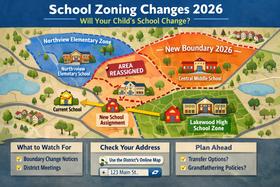
Learn more about zoning rules, how they impact schools and your child. This section offers information on the history of school zones, what they are, and how they work. Get information on who decides school boundaries and the impact those decisions have on the community.
GETTING STARTED
An overview of school designations, best practices for evaluating your options, and tips on choosing the best school for your child. Learn about Blue Ribbon, Vocational and Special Education schools. Get tips on finding the right school in a new neighborhood, city or state.
GRADING AND RANKING SCHOOLS
Explore the public school grading/ranking system, how it works and what it means. Get latest national rankings and read what critics of school grading have to say. Take a look at the nation鈥檚 top performing schools as ranked by U.S. News and Newsweek.
PUBLIC SCHOOL SAFETY
A comprehensive look at the safety of US public schools. Learn what schools are doing to combat gangs and drugs, prepare for natural disasters, and protect your children from predators. From web cameras to armed guards, see what tools public schools are employing to keep kids safe.
PUBLIC VS. PRIVATE SCHOOLS
A comparison of public and private schools, the pros and cons of each, and a look at the cost of getting a stellar education at both. Take a look at some of the most expensive schools, notable public school alumni, and learn more about 鈥減rivate鈥 public schools.