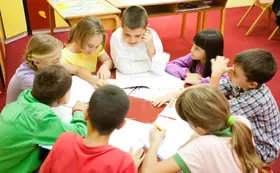
Iroquois Middle School serves 579 students in grades 7-8.
The student-teacher ratio of 14:1 was lower than the Michigan state level of 17:1.
Minority enrollment was 96% of the student body (majority Black), which was higher than the Michigan state average of 37% (majority Black).
School Overview
Grades Offered
Grades 7-8
Total Students
579 students
Total Classroom Teachers
40 teachers
School Rankings
Student-Teacher Ratio
14:1
17:1
American Indian
1%
1%
Asian
1%
4%
Hispanic
9%
9%
Black
85%
18%
White
4%
63%
Hawaiian
n/a
n/a
Two or more races
n/a
5%
All Ethnic Groups
Eligible for Free Lunch
80%
50%
Eligible for Reduced Lunch
20%
4%
School Statewide Testing
School District Name
Source: National Center for Education Statistics (NCES), MI Dept. of Education
Frequently Asked Questions
How many students attend Iroquois Middle School?
579 students attend Iroquois Middle School.
What is the racial composition of the student body?
85% of Iroquois Middle School students are Black, 9% of students are Hispanic, 4% of students are White, 1% of students are American Indian, and 1% of students are Asian.
What is the student-teacher ratio of Iroquois Middle School?
Iroquois Middle School has a student ration of 14:1, which is lower than the Michigan state average of 17:1.
What grades does Iroquois Middle School offer ?
Iroquois Middle School offers enrollment in grades 7-8
What school district is Iroquois Middle School part of?
Iroquois Middle School is part of Grand Rapids Public Schools.
Recent Articles

School Vouchers: Updated Pros and Cons (2025 Review)
Comprehensive 2025 analysis of school vouchers, weighing benefits and challenges for families, funding, outcomes, and policy directions.

Benefits and Drawbacks of Homework in 2025
Explore updated 2025 insights on homework鈥檚 benefits, drawbacks, mental health impact, best practices, and policy trends in U.S. public schools.
Charter Schools vs Public Schools 2025: Key Differences & Trends
Explore updated 2025 insights comparing charter schools vs public schools, enrollment, academic outcomes, funding, and real-world examples for families and educators.