
Pine Creek Elementary School serves 2 students in grades Kindergarten-8.
The student-teacher ratio of 2:1 is lower than the Oregon state level of 17:1.
Quick Facts (2026)
- Grades: Kindergarten-8
- Enrollment: 2 students
- Student-Teacher Ratio: 2:1
- Source: National Center for Education Statistics (NCES), OR Dept. of Education
School Overview
Pine Creek Elementary School's student population of 2 students has declined by 60% over five school years.
The teacher population of 1 teachers has stayed relatively flat over five school years.
Grades Offered
Grades Kindergarten-8
(No virtual instruction)
(No virtual instruction)
Total Students
2 students
Total Classroom Teachers
1 teacher
School Rankings
The diversity score of Pine Creek Elementary School is 0.00, which is less than the diversity score at state average of 0.60. The school's diversity has stayed relatively flat over five school years.
Student-Teacher Ratio
2:1
17:1
American Indian
n/a
1%
Asian
n/a
4%
Hispanic
n/a
26%
Black
n/a
3%
White
100%
58%
Hawaiian
n/a
1%
Two or more races
n/a
7%
All Ethnic Groups
Eligible for Free Lunch
100%
51%
Eligible for Reduced Lunch
100%
2%
School Statewide Testing
School District Name
Source: National Center for Education Statistics (NCES), OR Dept. of Education
Frequently Asked Questions
How many students attend Pine Creek Elementary School?
2 students attend Pine Creek Elementary School.
What is the racial composition of the student body?
100% of Pine Creek Elementary School students are White.
What is the student-teacher ratio of Pine Creek Elementary School?
Pine Creek Elementary School has a student ration of 2:1, which is lower than the Oregon state average of 17:1.
What grades does Pine Creek Elementary School offer ?
Pine Creek Elementary School offers enrollment in grades Kindergarten-8 (No virtual instruction).
What school district is Pine Creek Elementary School part of?
Pine Creek Elementary School is part of Pine Creek School District 5.
School Reviews
Review Pine Creek Elementary School. Reviews should be a few sentences in length. Please include any comments on:
- Quality of academic programs, teachers, and facilities
- Availability of music, art, sports and other extracurricular activities
Recent Articles

Multilingual Learner Growth Models & Accountability
Learn how multilingual learner growth models are reshaping school accountability systems and what it means for public schools in 2026.

School-Based Health Clinics: Funding, Billing, and Student Access
Learn how school-based health clinics are funded, how billing works, and how students access care in public schools.
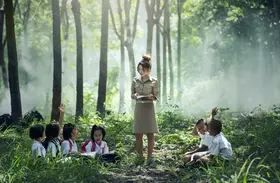
Outdoor Learning in Urban Schools: Forest School Programs
Explore how urban districts adopt outdoor learning and forest school programs to boost student engagement, well-being, and academic success.




