
For the 2026 school year, there are 6 public schools serving 1,679 students in Gustine, CA (there are , serving 140 private students). 92% of all K-12 students in Gustine, CA are educated in public schools (compared to the CA state average of 90%).
The top-ranked public schools in Gustine, CA are Pioneer High (Continuation School), Romero Elementary School and Gustine High School. Overall testing rank is based on a school's combined math and reading proficiency test score ranking.
Gustine, CA public schools have an average math proficiency score of 14% (versus the California public school average of 34%), and reading proficiency score of 30% (versus the 47% statewide average). Schools in Gustine have an average ranking of 1/10, which is in the bottom 50% of California public schools.
Minority enrollment is 90% of the student body (majority Hispanic), which is more than the California public school average of 80% (majority Hispanic).
Best Public Schools in Gustine, CA (2026)
School
(Math and Reading Proficiency)
(Math and Reading Proficiency)
Location
Quick Facts
Rank: #11.
Pioneer High (Continuation School)
Alternative School
(Math: <50% | Reading: <50%)
Rank:
Rank:
8/
Top 30%10
501 North Ave.
Gustine, CA 95322
(209) 854-6414
Gustine, CA 95322
(209) 854-6414
Gr: 9-12 | 21 students Student-teacher ratio: 21:1 Minority enrollment: 89%
Rank: #22.
Romero Elementary School
(Math: 35-39% | Reading: 35-39%)
Rank:
Rank:
6/
Top 50%10
13500 West Luis Rd.
Gustine, CA 95322
(209) 854-6177
Gustine, CA 95322
(209) 854-6177
Gr: K-5 | 222 students Student-teacher ratio: 17:1 Minority enrollment: 93%
Rank: #33.
Gustine High School
(Math: 6-9% | Reading: 40-44%)
Rank:
Rank:
3/
Bottom 50%10
501 North Ave.
Gustine, CA 95322
(209) 854-6414
Gustine, CA 95322
(209) 854-6414
Gr: 9-12 | 553 students Student-teacher ratio: 18:1 Minority enrollment: 89%
Rank: #44.
Gustine Middle School
(Math: 11% | Reading: 28%)
Rank:
Rank:
2/
Bottom 50%10
28075 Sullivan Rd.
Gustine, CA 95322
(209) 854-5030
Gustine, CA 95322
(209) 854-5030
Gr: 6-8 | 380 students Student-teacher ratio: 18:1 Minority enrollment: 92%
Rank: #55.
Gustine Elementary School
(Math: 13% | Reading: 21%)
Rank:
Rank:
2/
Bottom 50%10
2806 West Grove Ave.
Gustine, CA 95322
(209) 854-6496
Gustine, CA 95322
(209) 854-6496
Gr: K-5 | 503 students Student-teacher ratio: 19:1 Minority enrollment: 89%
Gustine, California Public Schools (Closed)
School
Location
Quick Facts
Gustine Community Day (Closed 2010)
Alternative School
701 Wallis Ave.
Gustine, CA 95322
(209) 854-9582
Gustine, CA 95322
(209) 854-9582
Gr: 7-12 | 5 students Student-teacher ratio: 5:1 Minority enrollment: 80%
Frequently Asked Questions
What are the top-ranked public schools in Gustine, CA?
The top-ranked public schools in Gustine, CA include Pioneer High (Continuation School), Romero Elementary School and Gustine High School.
How many public schools are located in Gustine?
6 public schools are located in Gustine.
What percentage of students in Gustine go to public school?
92% of all K-12 students in Gustine are educated in public schools (compared to the CA state average of 90%).
What is the racial composition of students in Gustine?
Gustine public schools minority enrollment is 90% of the student body (majority Hispanic), which is more than the California public schools average of 80% (majority Hispanic).
Which public schools in Gustine are often viewed compared to one another?
Popular comparisons of public schools in Gustine include: Gustine Elementary School vs. Gustine High School, Gustine Middle School vs. Gustine Elementary School, Gustine High School vs. Gustine Elementary School
Recent Articles

Multilingual Learner Growth Models & Accountability
Learn how multilingual learner growth models are reshaping school accountability systems and what it means for public schools in 2026.

School-Based Health Clinics: Funding, Billing, and Student Access
Learn how school-based health clinics are funded, how billing works, and how students access care in public schools.
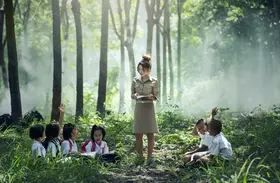
Outdoor Learning in Urban Schools: Forest School Programs
Explore how urban districts adopt outdoor learning and forest school programs to boost student engagement, well-being, and academic success.