
For the 2026 school year, there is 1 public preschool serving 635 students in 66749, KS.
Public preschool in zipcode 66749 have an average math proficiency score of 33% (versus the Kansas public pre school average of 40%).
Minority enrollment is 16% of the student body (majority Hispanic), which is less than the Kansas public preschool average of 36% (majority Hispanic).
Best 66749, KS Public Preschools (2026)
School
(Math and Reading Proficiency)
(Math and Reading Proficiency)
Location
Quick Facts
Rank: n/an/a
203 N. Kentucky
Iola, KS 66749
(620) 365-4820
Iola, KS 66749
(620) 365-4820
Gr: PK-5 | 635 students Student-teacher ratio: 15:1 Minority enrollment: 16%
66749, Kansas Public Schools (Closed)
School
Location
Quick Facts
300 S Jefferson
Iola, KS 66749
(620) 365-4840
Iola, KS 66749
(620) 365-4840
Gr: 1-2 | 138 students Student-teacher ratio: 10:1 Minority enrollment: 17%
700 N Jefferson
Iola, KS 66749
(620) 365-4820
Iola, KS 66749
(620) 365-4820
Gr: 3-4 | 151 students Student-teacher ratio: 12:1 Minority enrollment: 17%
209 S Kentucky
Iola, KS 66749
(620) 365-4860
Iola, KS 66749
(620) 365-4860
Gr: PK-K | 240 students Student-teacher ratio: 34:1 Minority enrollment: 14%
Frequently Asked Questions
How many public preschools are located in 66749, KS?
1 public preschools are located in 66749, KS.
What is the racial composition of students in 66749?
66749 public preschools minority enrollment is 16% of the student body (majority Hispanic), which is less than the Kansas public preschools average of 36% (majority Hispanic).
Recent Articles

Multilingual Learner Growth Models & Accountability
Learn how multilingual learner growth models are reshaping school accountability systems and what it means for public schools in 2026.

School-Based Health Clinics: Funding, Billing, and Student Access
Learn how school-based health clinics are funded, how billing works, and how students access care in public schools.
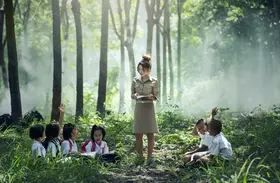
Outdoor Learning in Urban Schools: Forest School Programs
Explore how urban districts adopt outdoor learning and forest school programs to boost student engagement, well-being, and academic success.