Top Rankings
School For Blind School District ranks among the top 20% of public school district in Kansas for:
Category
Attribute
Diversity
Most diverse schools (Top 1%)
Student Attention
Lowest student-teacher ratio (Top 1%)
For the 2025-26 school year, there is 1 public high school serving 11 students in School For Blind School District.
Public High School in School For Blind School District have an average math proficiency score of 50% (versus the Kansas public high school average of 22%).
Minority enrollment is 45% of the student body (majority Hispanic), which is more than the Kansas public high school average of 37% (majority Hispanic).
Overview
This School District
This State (KS)
# Schools
2 Schools
403 Schools
# Students
18 Students
163,604 Students
# Teachers
13 Teachers
10,703 Teachers
Student-Teacher Ratio
1:1
1:1
Student By Grade
Students by Ethnicity:
Diversity Score
0.68
0.55
% American Indian
n/a
1%
% Asian
6%
3%
% Hispanic
22%
21%
% Black
11%
6%
% White
50%
63%
% Hawaiian
n/a
n/a
% Two or more races
11%
6%
All Ethnic Groups
District Revenue and Spending
Total Revenue
$9 MM
$7,774 MM
Spending
$9 MM
$8,211 MM
Best School For Blind School District Public High Schools (2025-26)
School
(Math and Reading Proficiency)
(Math and Reading Proficiency)
Location
Quick Facts
Rank: n/an/a
School For Blind High School
Special Education School
1100 State Avenue
Kansas City, KS 66102
(913) 305-3000
Kansas City, KS 66102
(913) 305-3000
Gr: 7-12 | 11 students Student-teacher ratio: 2:1 Minority enrollment: 45%
Recent Articles
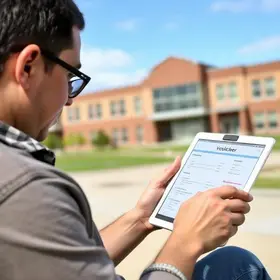
School Vouchers: Updated Pros and Cons (2025 Review)
Comprehensive 2025 analysis of school vouchers, weighing benefits and challenges for families, funding, outcomes, and policy directions.

Benefits and Drawbacks of Homework in 2025
Explore updated 2025 insights on homework鈥檚 benefits, drawbacks, mental health impact, best practices, and policy trends in U.S. public schools.

Charter Schools vs Public Schools 2025: Key Differences & Trends
Explore updated 2025 insights comparing charter schools vs public schools, enrollment, academic outcomes, funding, and real-world examples for families and educators.